Old Crow's Synth Shop: The Synth-Tan Project: Minimoog
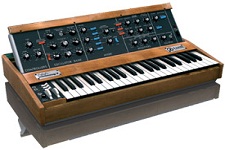
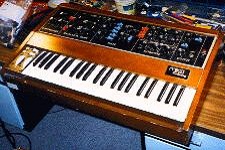
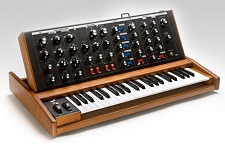
Dr. Robert A. Moog, the father of the modern synthesizer, was famous for his Moog Modular synthesizer systems designed in the 1960s and sold from 1966 to 1980. Few machines are as coveted today as the Moog modular systems, but while the modulars are undoubtedly deserving of their own character personas, it is the minimoog that most of us have come to recognize from the progressive rock movement of the 1970s and onward.
The Minimoog was Bob's response to being asked by professional
musicians to create a Moog machine for the stage performer. Modular
systems, which use patch cords to plug system elements together, are not
very "stage friendly" as plugging system parts together with cables in a
live setting is rather awkward. Keith Emerson managed it by having Moog
build a custom patch switching module to allow patching to happen with
buttons, thus 'normalizing' control over synthesizer sound elements.
The Minimoog's design was the first to fully normalize all voice
parameters into a chain of elements that, while hardwired in a specific
order, each element had its own set of panel controls that allowed the
performer to adjust things in real time to allow for the sound dynamics
a performance demanded. This is evident in the following track from the
incredible prog. rock tribute album Regeneration, by The Lens --
To the Power of Five. The entire lead melody is
done on a Minimoog (except when it is a guitar lead ;).
The Minimoog hails from a time when every band made "summer albums," with bright melodies and lots of positive energy. Every time I hear a minimoog driving the lead of a song, it reminds me of those days of my youth when I would go to concert festivals to hear a line-up of bands that provided an upbeat experience. Not a hint of "doom and gloom" anywhere.
--Crow